
Why You Never Wake Up Feeling "Rested"...
Why You Never Wake Up Feeling "Rested"
SLEEP: THE OVERLOOKED PIECE OF THE CORTISOL + BODY COMPOSITION PUZZLE
You can eat well, work out consistently, and take all the right supplements… but if you're not sleeping well, your body may not be recovering the way you think it is.
Here's why.
Your cortisol — your body's primary stress hormone — follows a natural 24-hour rhythm. It generally rises around the time you wake up, increases further during the first 30–45 minutes after waking, and gradually declines toward the evening.
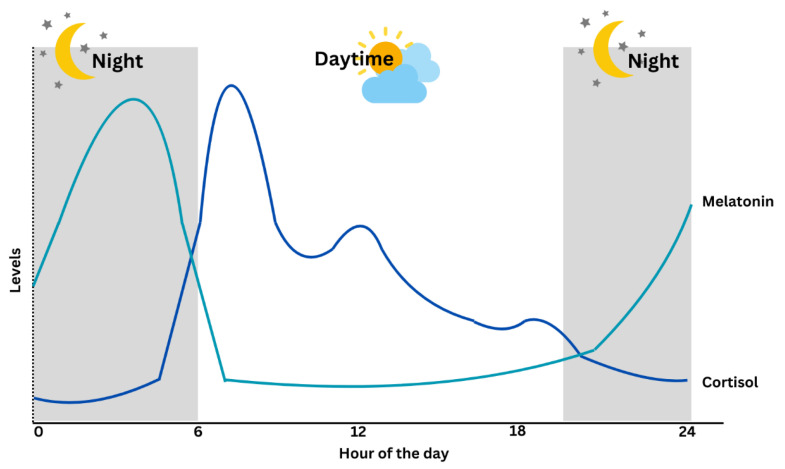
This rhythm matters. Cortisol helps regulate your energy, metabolism, alertness, and response to stress. Sleep and your internal body clock work together to regulate this process.
But when sleep is consistently disrupted, your stress-response system can become less well regulated.
Research suggests that insufficient or poor-quality sleep can increase the body's cortisol response to stress, and restricting sleep may elevate cortisol later in the day. The relationship isn't identical for everyone, but the takeaway is clear: sleep is an essential part of recovery — not an optional bonus. [1, 2]
And there's another piece to consider: your body composition.
Poor sleep can influence appetite-regulating hormones, food cravings, insulin sensitivity, and your ability to recover from exercise. Over time, these changes can make weight management more difficult.
That doesn't mean belly fat automatically equals high cortisol. It means that if you're struggling with abdominal fat, low energy, and constant fatigue, sleep quality deserves a place in the conversation — alongside nutrition, movement, stress, and other health factors.
5 HABITS THAT CAN TRANSFORM YOUR SLEEP
1. Anchor your wake-up time.
Try waking up at approximately the same time every day, including weekends. A consistent wake time helps reinforce your circadian rhythm, which influences when you feel alert and when your body prepares for sleep.
2. Get outside in the morning.
Aim for 30 minutes of natural outdoor light daily, ideally earlier in the day. Outdoor light helps synchronize your internal body clock. You don't need to stare at the sun, and looking through a window generally provides a weaker light signal than being outdoors.
3. Create a bedroom that supports sleep.
A cool, dark, quiet room can make it easier to fall asleep and stay asleep. Try starting around 65–68°F (18–20°C), then adjust to what feels comfortable for you. There's no single perfect temperature for everyone.
4. Stop asking your brain to associate your bed with everything except sleep.
Your bed shouldn't double as your office, entertainment center, and doomscrolling station...aka we are NOT charging our phone on our night stand. (Yes, even if it is your current alarm clock). Keeping work, emails, and stimulating activities out of bed helps strengthen the association between your bed and sleep. If you're lying awake for a long time, get up and do something quiet until you feel sleepy.
5. Set a caffeine cutoff.
Try avoiding caffeine at least 6–8 hours before bedtime. Even if you can fall asleep after an afternoon coffee, caffeine can still interfere with your sleep. A randomized study found that caffeine consumed even 6 hours before bed significantly disrupted sleep. [3]
BONUS: WHAT IF YOU'RE HUNGRY BEFORE BED?
You don't need to go to bed starving to support your goals. If hunger is keeping you awake, try a small snack, such as:
Kiwi
A banana with a few almonds
Plain Greek yogurt
Oatmeal with nuts or seeds
Kiwifruit has some promising preliminary research on sleep, but these foods aren't guaranteed sleep aids. Choose something satisfying that agrees with your digestion.
And remember: magnesium isn't a magic fix for poor sleep, either. Some research suggests supplementation may help certain people, but the evidence is still developing. Prioritize your overall sleep routine before assuming you need another supplement.
THE BOTTOM LINE: Your body doesn't just need enough hours in bed. It needs consistent, restorative sleep to support energy, mood, metabolic health, and exercise recovery.
If you're waking up exhausted despite giving yourself enough time to sleep, don't automatically blame your discipline — or your cortisol. Look at your sleep habits, and consider talking with a healthcare professional if fatigue persists, especially if you snore, gasp during sleep, or frequently wake up unrefreshed.
Your recovery is part of your results.
SOURCES
[1] Cortisol and the body clock: Stalder et al. (2024), The Cortisol Awakening Response. Read the review. Explains the normal rise in cortisol after waking and its role in preparing the body for the day. Endocrine Society
[2] Sleep and cortisol regulation: Sleep and Circadian Regulation of Cortisol: A Short Review. Read the peer-reviewed review. Reviews how sleep restriction and circadian timing influence cortisol, including the mixed findings across studies. PMC
[3] Caffeine and sleep: Drake et al. (2013), Caffeine Effects on Sleep Taken 0, 3, or 6 Hours before Going to Bed. Read the study.
