
Body Recomposition, Sleep, and Hormones
BODY RECOMPOSITION, SLEEP, AND HORMONES
Everything you need to know - and probably more - about sleep and body composition.
TLDR...
Your body runs on an internal 24-hour clock, and your hormones help coordinate what happens throughout the day.
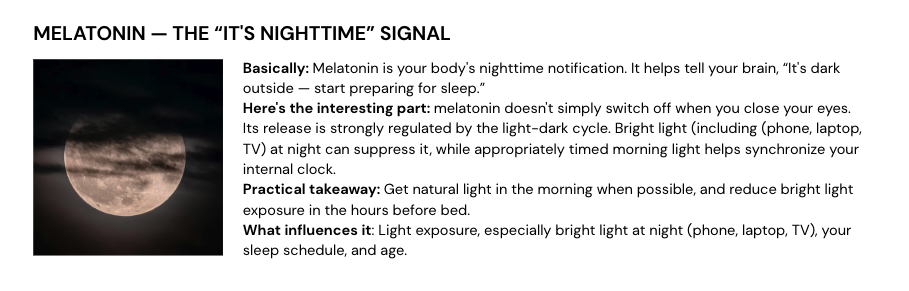
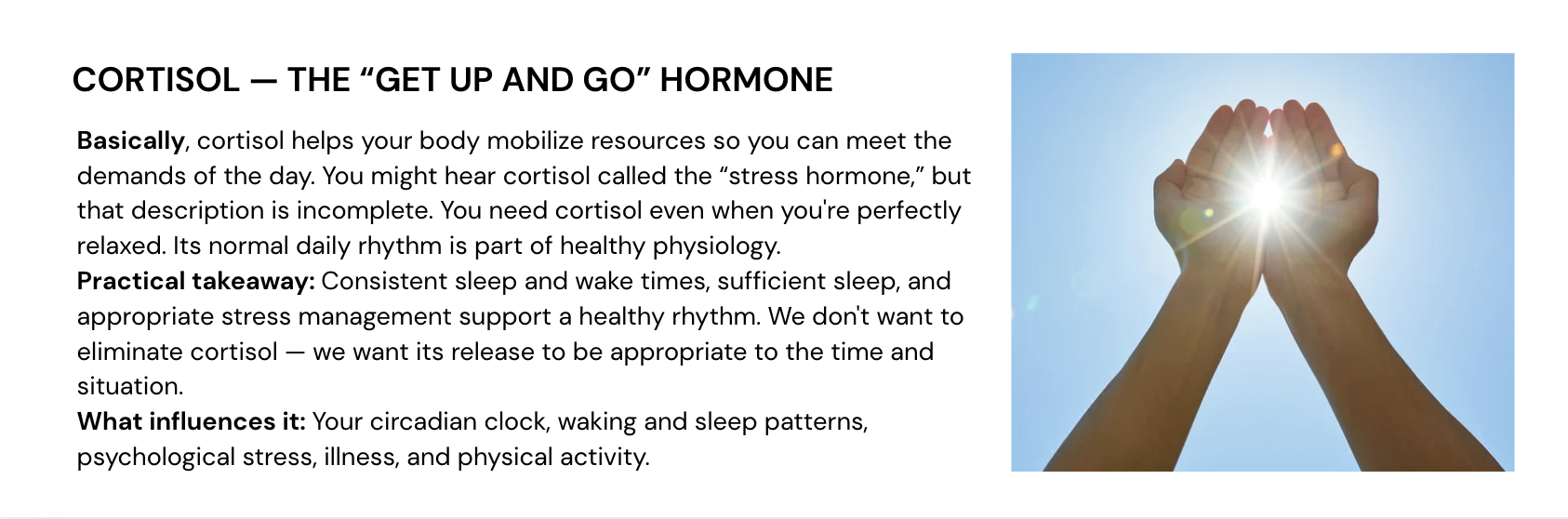
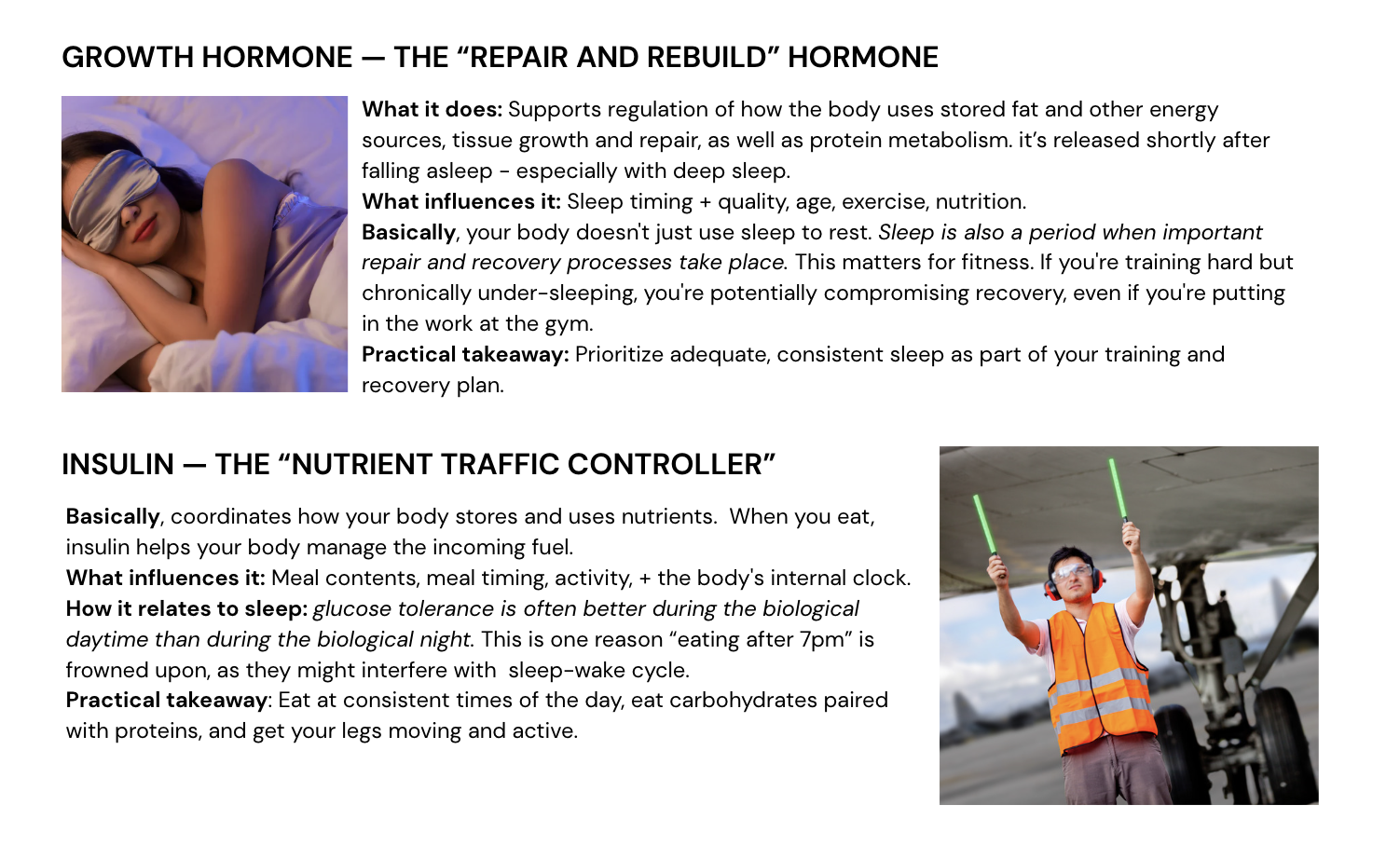
In the morning, cortisol helps prepare you to be alert. During the day, hormones like insulin help your body manage the fuel you eat, while ghrelin and leptin contribute to regulating hunger and energy balance. At night, melatonin helps signal that it's time to sleep, and deep sleep supports important recovery processes, including growth hormone release.
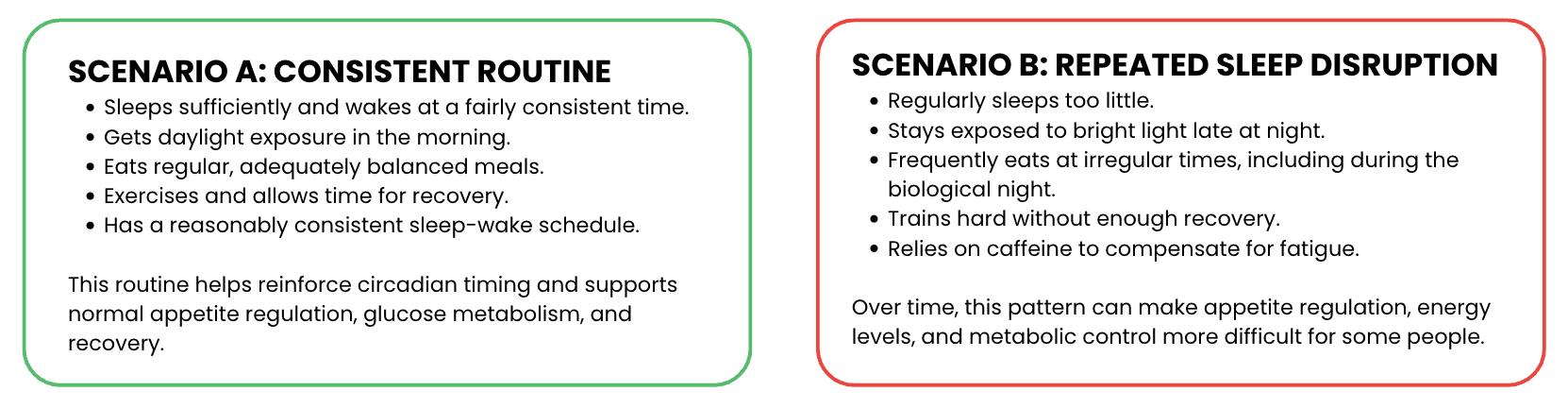
When sleep and daily routines are consistently disrupted, these systems can be affected. You may find that your appetite, energy, recovery, and ability to regulate blood sugar become more difficult to manage.
That's why nutrition, movement, sleep, light exposure, and stress management aren't separate pieces of health. They're interconnected.
⬇️ SLEEP = ⬆️ HUNGER HORMONE
First - what is circadian rhythm? It's your body's internal 24-hour schedule. Your brain and body use signals from the environment — especially light and darkness — to help determine when it's time to:
Wake up and feel alert.
Release hormones that support energy and metabolism.
Digest and process food.
Feel hungry or satisfied.
Repair and recover.
Wind down and prepare for sleep.
The important distinction: Your circadian rhythm isn't just about getting eight hours of sleep. It's also about when you sleep, eat, move, and experience light relative to your body's internal clock.
Your hormones follow daily patterns, but those patterns aren't rigid. They vary with your sleep schedule, age, health, stress, activity, and meal timing.
TIME | WHAT HAPPENS |
|---|---|
☀️ MORNING prepare for activity | Cortisol rises around the biological morning, melatonin falls, and light helps synchronize the body clock. You become more alert and ready to engage with the day. |
🍄 DAYTIME eat, move, and use fuel | Meals stimulate insulin, while hunger and fullness signals help regulate intake. Your circadian system also influences how your body processes nutrients. |
🌅 EVENING begin winding down | As light exposure decreases, melatonin begins to rise at the appropriate biological time. Your body transitions toward its usual rest phase. |
🌙 NIGHT sleep and recovery | Melatonin helps signal biological night, and deep sleep supports important recovery processes, including substantial pulses of growth hormone. Appetite signals and metabolism continue to follow their own rhythms. |
