weight loss plateaus
Why Weight Loss Plateaus
(And What to Do About It)
If you've ever been told that cutting 500 calories per day automatically leads to one pound of fat loss every week, you've heard the famous 3,500-calorie rule.
While it's a useful starting point, it's not an exact formula—and it becomes less accurate the longer you diet.
Why?
The 3,500-calorie rule assumes your body behaves like a simple math equation. In reality, your metabolism is constantly adapting.
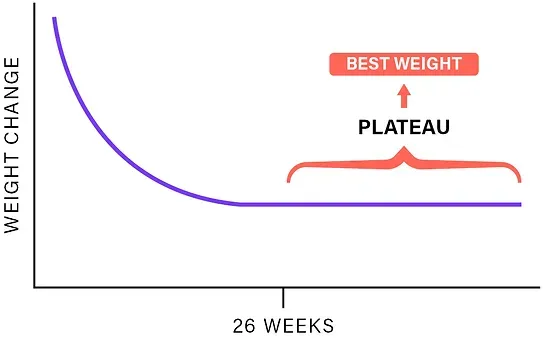
When you first begin eating in a calorie deficit, you'll usually lose weight quickly. Some of that loss is body fat, but a large portion comes from stored carbohydrates (glycogen) and the water attached to them. That's why the first couple of weeks often produce dramatic results.
As time goes on, things naturally slow down.
Your body becomes smaller, which means it requires fewer calories to function. At the same time, your metabolism adapts by becoming more efficient. You may also move less throughout the day without realizing it, burn fewer calories during exercise, and experience increased hunger—all of which make continued fat loss more challenging.
This is called metabolic adaptation, and it's one of the main reasons weight loss plateaus happen.
A plateau doesn't necessarily mean your metabolism is "broken." It usually means your body has adjusted to your current calorie intake and activity level.
What You Can Do
If progress has stalled, don't panic. Instead, focus on the fundamentals:
Reassess your calorie intake. As you lose weight, your calorie needs decrease. A deficit that worked 20 pounds ago may now be closer to maintenance.
Prioritize protein. Protein helps preserve lean muscle while dieting and keeps you feeling fuller between meals.
Strength train consistently. Building and maintaining muscle supports your metabolism and helps improve body composition during weight loss.
Increase daily movement. Walking more, taking the stairs, standing instead of sitting, and other everyday movement can significantly increase calorie expenditure.
Train with variety—but with purpose. Strength training, hypertrophy, conditioning, Pilates, yoga, low-intensity cardio, and higher-intensity cardio all have unique benefits. You don't need to constantly "confuse" your body, but strategically combining different training styles can help prevent burnout, improve fitness, and keep progress moving.
Manage stress and prioritize sleep. Poor sleep and chronic stress can increase hunger, reduce recovery, and make healthy habits harder to maintain.
Don't rely solely on the scale. Body weight naturally fluctuates from day to day because of hydration, sodium intake, hormones, digestion, and glycogen stores. Track progress with photos, measurements, strength gains, how your clothes fit, and overall energy levels—not just the number on the scale.

The Bottom Line
Weight loss isn't a straight line.
The longer you're in a calorie deficit, the more your body adapts. That doesn't mean fat loss is impossible—it simply means the strategy that got you started may need to evolve.
Rather than chasing extreme diets or endless cardio, stay consistent with the basics: eat enough protein, strength train, stay active, recover well, and adjust your nutrition as your body changes.
Plateaus are a normal part of the process—not a sign that you've failed.
