Appetite vs. Hunger - What's the Difference?
Appetite vs. Hunger
Hunger is different than appetite. One is the biological or innate DRIVE for food....while the other is a mix of socially conditioned and sensory PERCEPTIONS of feasting patterns.
When it comes to hunger, think:
stomach growls
energy dip
lightheadedness
ANY food sounds good to eat
When it comes to appetite, think:
it's "time" for lunch, so I should eat
you smell or see pizza when you walk by a shop
boredom or moodiness
you usually "crave" a specific food
We’d love to put hunger and appetite into two neat, separate boxes—but the reality is much more nuanced. They often overlap, work together, and both play a role in helping your body recognize and respond to its need for nourishment. You can think about the "flow" of cues like this:
HUNGER → APPETITE → FOOD → SATIETY
Hunger
Hormones: It’s important to note that there are other hormones and hormone-like substances that work together with the brain that tell us when we’re hungry or full. Examples of those are leptin, galanin, serotonin, cholecystokinin, ghrelin, and neuropeptide Y, to name a few.
Food is information. What you eat can influence your hunger, fullness, energy, digestion, and how satisfied you feel after a meal. This is one reason the composition of a meal matters (AKA having all macronutrients on the plate).
A meal that combines protein, fiber, healthy fats, and carbohydrates is generally going to be more satisfying...especially compared to a meal of predominantly refined carbohydrates, with little protein or fiber.
Protein is particularly helpful for satiety (psychologically via nerve signals, glucose levels, and hormones.
Fiber and water add volume to a meal and can help you feel physically full (increases stomach pressure).
Fats and certain types of fiber can make you feel more full. Essentially, they slow down stomach emptying via a hormonal / neurological feedback loop in the gut that delay how fast food leaves the stomach, increasing fullness.
So, when building a meal, here are the wrong questions to ask: “How few calories can I get away with eating?” or “How long can I go without feeling hungry?”. Instead, here's the right one to ask: “How can I build meals that actually nourish me and leave me feeling satisfied?”
Here's a hack:
If you want to start to “like” a food that you know you SHOULD eat but just cannot stomach it, help pair it with something you DO like.
For example, I used to really not love beets. But once I started pickling them / pairing them with acidic vinegar - they’re all I can think about. I used to hate the taste of aloe vera juice (for digestion!!). I started to pair it with some coconut water and/or lemon juice + honey…I down the glass in 5 seconds.
If you’re not a vegetable person, what if you started by drizzling hot sauce on your veggies? Or some sort of caesar dressing? Or even pairing them in a
Here’s why: we want to connect nutritious foods with positive EMOTION.
All senses (except smell) route through the thalamus first
The thalamus acts like a central switchboard, directing sensory information (sight, sound, touch, taste) to the appropriate processing areas in the cerebral cortex.
Olfaction (smell) has a direct connection
Unlike the other senses, olfactory signals bypass the thalamus and go directly to the olfactory bulb and areas like the amygdala, a key emotional processing center.
This direct pathway is one reason why smells can evoke such strong and immediate emotional responses and memories.
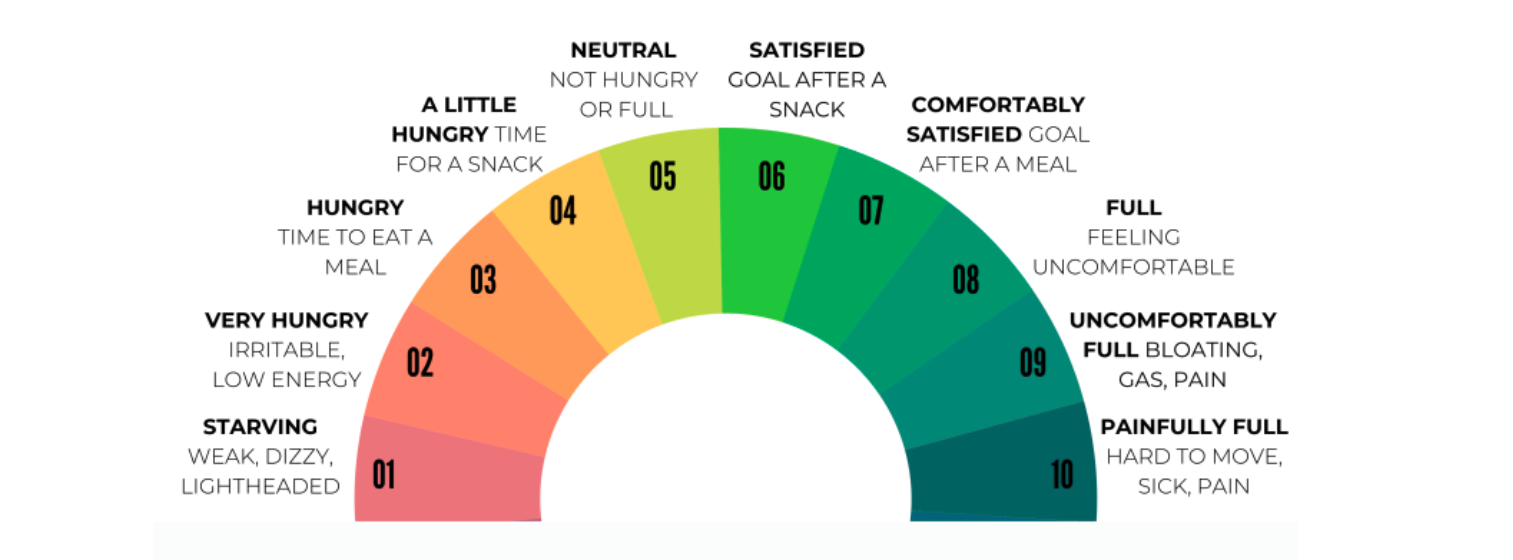
Hunger / Fullness Scale
Keep this one hand (screenshot, print out, save as a "file" on your phone). Ideally, we are staying between a 3-7 on this scale.
🚨 2 is a dangerous place for risk of overeating
😮💨 8 is an uncomfortable place when you have already eaten too much.