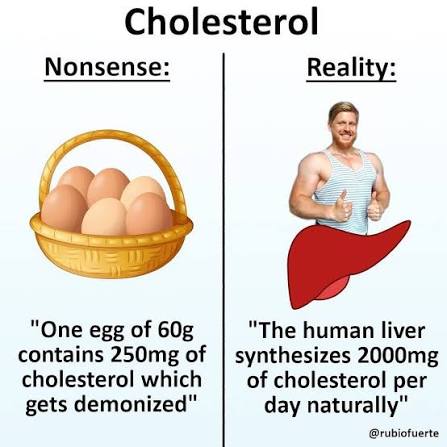
cholesterol is not caused by what you think it's caused by...
One of the most highlighted topics that crosses my desk is around: cholesterol. One thing I’m always interested in exploring with clients is whether certain foods are truly off-limits because your body genuinely feels better without them…or whether some of it may come from older nutrition messaging that taught us to fear certain foods automatically.
Ok...stay with me for this one:
An estimated 400 miles of additional blood vessels develop for each extra pound of fat.
This might be one reason why overweight individuals may have higher blood pressure.
The longer the blood vessel, the greater the contact between the vessel wall and the blood. The greater the contact between the vessel wall and the blood, the greater the friction. The greater the friction (or "resistance"), the more inflammation and blockage is bound to happen in the blood vessels.
SO, in summary, the longer the blood vessel, the more susceptible that vessel might be to blockage.
HOW CHOLESTEROL GETS AROUND
Cholesterol needs to travel from cell to cell via a water slide known as the blood. Since cholesterol is fat-loving and the blood is mostly water, it needs to call an uber to bring it from A to B! That five-star uber driver's name is: Lipoprotein. Now, there a few types of lipoproteins, but I want to focus on two: High Density Lipoproteins (HDL) and Low Density Lipoproteins (LDL).
First, we need to acknowledge that neither cholesterol nor lipoproteins are good or bad. To do this, I want to share three absolutely vital roles cholesterol plays in the body:
SHEILD: It's required to build and maintain every single membrane of your cell. Think of cholesterol as a ninja fighting off bad guys that try to enter your cells.
HORMONE PRECURSOR: It's a precursor for all your reproductive and steroid hormones - A precursor to all steroid hormones like cortisol, aldosterone, progesterone, estrogens, and testosterone.
FAT DIGESTION: Cholesterol is converted in the liver to make bile, which is the only thing the body has to help break down fats. IF we don't have enough bile, we have excess fat particles sitting in our blood stream...which not only causes infection, but also severe digestive discomfort, and potentially food in stool.
WHERE - OR WHAT - IS CHOLESTEROL?

25% of the cholesterol in our body at any given time comes from our diet/food. The other 75% is produced inside of our bodies by the liver (source).
Much of the cholesterol that’s found in food can’t be absorbed by our bodies, when cholesterol intake in the diet goes down, the body makes more. When cholesterol intake in the diet goes up, the body makes less.
LET'S DIVE INTO SOME STUDIES...
Studies show: Patients with high LDL cholesterol (LDL-C) and low LDL particle number (LDL-P) are not at high risk of heart disease.
In fact, studies suggest they’re at even lower risk than patients with low LDL-C and low LDL-P (source). Yet they will often be treated with statin drugs or other cholesterol lowering medications, because the clinician only looked at LDL-C and failed to measure LDL particle number. This is a concern for two reasons.
First, statin drugs aren’t harmless.
Second, studies suggest that low cholesterol can increase the risk of death, especially in women and the elderly (source).
Butter, beef, pork and lamb consumption did not increase risk of heart disease. Cookies and white bread - aka heavily processed foods - did (source).
Another, more recent, study compared daily intake of lean beef vs. poultry in adults with pre-diabetes / overweight and found no significant differences in blood sugar control, insulin response, inflammation, or blood lipids between the groups after 28 days.
I’m not sharing this to persuade you to suddenly start eating steak every day —more just to open the conversation and gently challenge the idea that beef is inherently “bad” or automatically harmful for everyone metabolically. Nutrition science has become much more nuanced over the years.
At the end of the day, preference matters too. If you simply don’t enjoy beef or feel better eating other protein sources, that’s completely okay.
THEN, HOW SHOULD WE MEASURE HEART DISEASE RISK INSTEAD?
Different units of measurement that might better indicate heart disease risk:
Elevated low density lipoprotein particle number (LDL-P#) *NOTE: this is particle number, not just LDL. - this is key.
Inflammation: if arterial lining is inflamed it is much more likely to allow LDL particles in!
High Blood Pressure (note: stage 1 & stage 2 = HYPERTENSION)
High C-reactive protein (CRP)
High homocysteine
POTENTIAL CONTRIBUTORS TO A HIGH (LDL-P#)
Highly refined carb diet: low carb diets have been proven to
Sugar, specifically high fructose corn syrup
Leaky gut
Elevated triglycerides
Infection
Hypothyroidism
Genetics
